

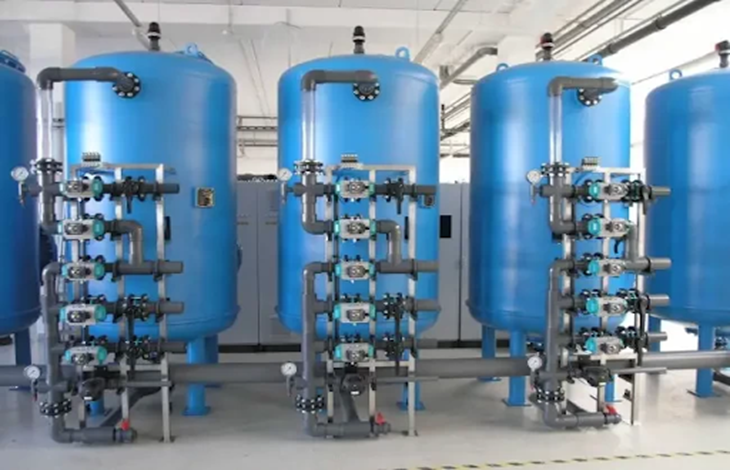
Frequent media changes, unplanned downtime, and inconsistent filtration performance are common challenges in industrial filtration systems. In many cases, these issues are linked to how quickly a filter media roll reaches the end of its usable life. While media replacement is expected, premature changeouts often indicate that system conditions, contaminant load, or media selection are misaligned.
What Determines Filter Media Roll Service Life?
The service life of a filter media roll is determined by contaminant load, media structure, flow distribution, and operating conditions. High solids, uneven flow, and poor media selection reduce lifespan, while balanced system design and appropriate filtration media extend service intervals and maintain consistent performance.
What Controls the Lifespan of Filter Media in Practice
The lifespan of a filter media roll is determined by how quickly its structure fills with contaminants or begins to degrade under operating conditions.
In practical applications, this comes down to:
- The volume and nature of incoming contaminants
- The internal structure of the filtration media
- How evenly the system distributes flow
- External conditions, such as temperature or chemical exposure
For example, in wastewater treatment handling variable inflows, sudden increases in suspended solids can significantly shorten media life if the system is not designed to handle peak loads.
When these elements are balanced, industrial filtration systems can run longer between media changes without compromising performance.
Media Structure and Filtration Mechanism
A filter media roll is designed to capture particles progressively as it progresses through its depth.
Layered or graded-density filtration media allow larger particles to be retained first, while finer particles are captured deeper within the material. This reduces the chance of rapid surface blockage and supports more stable operation.
In metalworking fluid applications, where both fine metal particles and coolant residues are present, this depth-based approach helps maintain flow while still capturing contaminants effectively.
If the structure is too restrictive, flow drops early. If it is too open, contaminants pass through. The correct balance ensures the media loads evenly and remains effective over a longer period.
Contaminant Behaviour and Loading Patterns
Service life is strongly influenced by how contaminants interact with the media rather than just how much is present.
Fine particles settle within the flow, reducing flow capacity. Larger particles remain on the surface, forming a layer that alters filtration.
Certain conditions accelerate loading:
- Oily residues that coat fibres
- Sticky solids that block pathways
- High concentrations of fine particulate
In high-solids environments, such as mining or heavy manufacturing wastewater, these effects are more pronounced. Media can reach saturation quickly if the system is not configured to manage heavy particulate loads.
Flow Distribution and System Conditions
Flow distribution determines how effectively the media is used.
If fluid is not spread evenly, only part of the filter media roll carries the filtration load. This leads to early clogging in specific areas while other sections remain underutilised.
Flow rate controls how quickly contaminants reach the media, while pressure influences how tightly particles are embedded in the media. These factors need to be managed together to maintain stable filtration conditions.
Balanced operation allows filtration media to load gradually and predictably, rather than failing prematurely in isolated areas.
Equipment Design and Media Handling
Mechanical setup plays a major role in whether the media is used efficiently.
Misalignment, poor tension control, or uneven support can cause:
- Wrinkling or folding of the media
- Channelling is where fluid bypasses filtration
- Concentrated wear in specific sections
In continuous systems, proper tracking ensures the entire filter media width is used. Otherwise, media consumption increases without improving filtration.
Well-designed industrial filtration systems ensure consistent contact between fluid and media across the entire surface.
Monitoring Performance and Replacement Timing
Service life should be measured by performance indicators rather than fixed time intervals.
Pressure differential provides a clear signal of how the media is loading. A steady increase reflects normal operation, while sudden changes may indicate uneven loading or system issues.
Visual checks help identify damage or irregular wear patterns.
Replacing filtration media at the right point maintains consistent output quality and avoids unnecessary strain on equipment.
Efficient Filtration Performance Depends on Correct Media Use and System Balance
The service life of a filter media roll is shaped by how media selection, contaminant behaviour, and system conditions work together.
Industrial filtration systems that maintain even flow distribution, use suitable filtration media, and monitor performance closely will achieve longer service intervals and more reliable results.
Consistent performance comes from using the media efficiently and replacing it when filtration quality begins to decline, not after failure occurs.
Read Also:
How Wastewater Filter Media Selection Influences System Throughput and Treatment Stability
Oil and Water Spill Kits: Preparedness and Proper Usage