

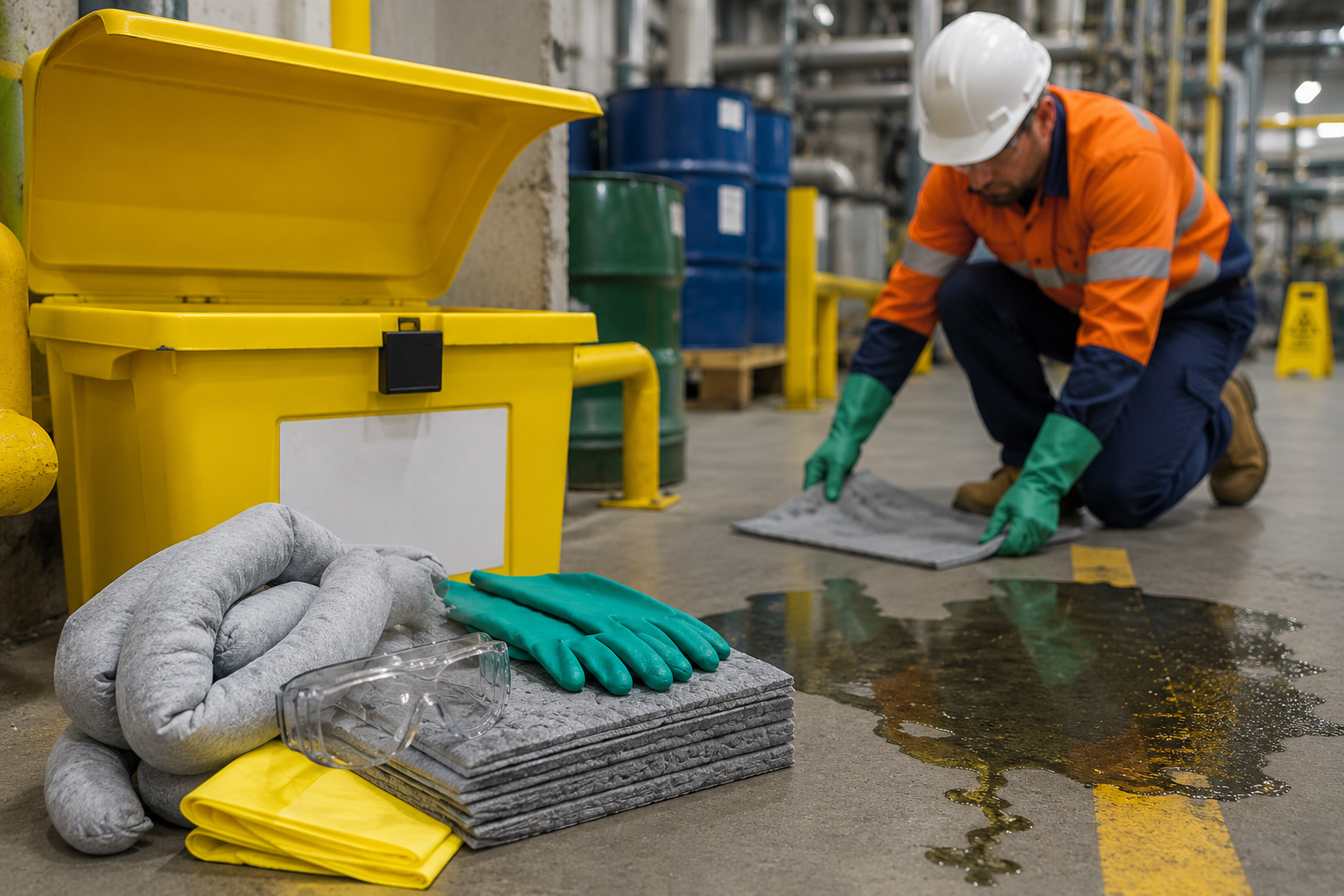
Industrial spill kit compliance is not simply a matter of keeping absorbent material somewhere on site. Effective spill preparedness involves identifying foreseeable spill risks, providing suitable response equipment, keeping it accessible and ensuring workers understand the workplace response procedure.
For Australian workshops, warehouses, manufacturing facilities, mining operations, transport depots and construction sites, this starts with understanding what could spill and where that liquid could travel. Hydraulic oil, fuel, coolant and hazardous chemicals can present different risks and may require different absorbents, containment measures and personal protective equipment (PPE).
What is industrial spill kit compliance?
Industrial spill kit compliance generally means having spill-response arrangements suited to the substances, activities and foreseeable risks within a workplace.
There is no single spill kit that automatically makes a workplace compliant. Under the model Work Health and Safety (WHS) framework, businesses handling hazardous chemicals may need spill containment systems where a spill or leak could create a risk. The controls required depend on the chemical, how it is stored or used and the circumstances in which a release could occur. Safe Work Australia provides guidance on WHS duties related to hazardous chemicals.
The response therefore needs to reflect the workplace. A maintenance workshop handling hydraulic oils has different spill risks from a chemical storage area or a CNC machining facility using coolant.
Having a spill kit is one part of the response. The equipment also needs to be suitable for the liquids involved, accessible when required and supported by appropriate workplace procedures.
Are spill kits required in Australian workplaces?
Australian workplaces need spill-response arrangements appropriate to the risks they manage, but this does not mean every workplace is legally required to keep the same type or size of spill kit.
For hazardous chemicals, the model WHS framework includes requirements relating to spill containment where a spill or leak presents a risk. Businesses should also check the WHS, environmental and dangerous goods requirements that apply within their state or territory, as Safe Work Australia develops the model framework rather than acting as the workplace regulator.
The practical question is therefore not simply, “Do we own a spill kit?” It is whether the workplace has appropriate controls for the spills that could reasonably occur.
A fuel handling area, for example, may need rapid containment to prevent a release reaching stormwater infrastructure. A coolant leak around manufacturing equipment may require absorbent material that can be safely reached without workers crossing the affected area.
Which Australian workplace requirements are relevant?
Spill preparedness can involve WHS duties, hazardous chemical requirements, environmental responsibilities and, in some operations, dangerous goods requirements.
Where hazardous chemicals are used, safety data sheets (SDSs) are an important part of planning the response. They provide information about the substance’s hazards, safe handling, accidental release measures and appropriate PPE.
This is particularly important when selecting spill-response equipment. Material suitable for an oil or coolant spill should not automatically be assumed to be compatible with every hazardous chemical.
Emergency planning also extends beyond the contents of the spill kit. Workplaces need procedures that explain how workers should respond, what equipment should be used and when an incident needs to be escalated rather than managed internally.
Environmental risks should also be considered. Oil contained on an impermeable workshop floor presents a different problem from oil entering a drain, soil or surface water. Spill planning should therefore consider both the substance involved and where it could travel if containment is delayed.
What type of spill kit does a workplace need?
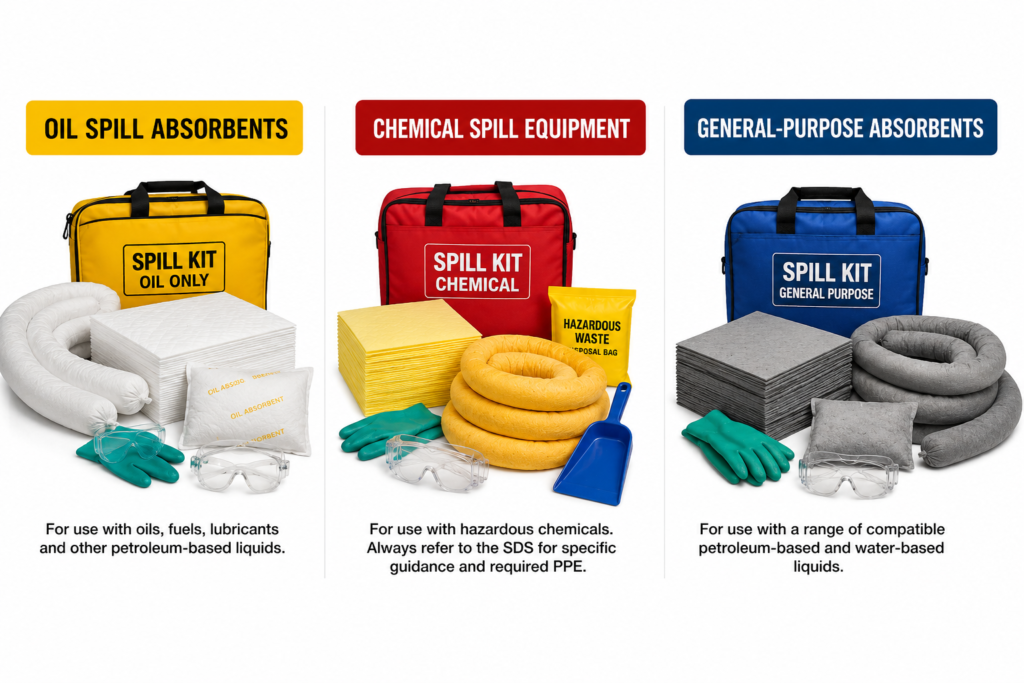
Oil-only, chemical and general-purpose spill kits cater to different liquid spill risks.
The liquids that could realistically spill should determine the response equipment available.
Oil spill absorbents are relevant around workshops, machinery, fuel handling areas and maintenance operations. Common incidents may include hydraulic leaks, lubricant releases and fuel spills during servicing or transfer.
Chemical spill equipment requires closer attention to the specific substance. The SDS should be reviewed for information about hazards, accidental release measures, handling and appropriate PPE. Some incidents may be beyond what workers can safely manage with routine workplace spill equipment and should instead trigger the site’s escalation or emergency procedure.
General-purpose absorbents may be suitable for compatible petroleum-based and water-based liquids.
Interfil’s spill kits and oil and water absorbents include Rapid Absorb 200, which is designed to absorb both petroleum-based and water-based spills. Interfil also identifies the material for maintenance matting beneath machinery where oil or coolant leaks occur.
These absorbents should not be assumed to be suitable for every hazardous chemical. Selection still needs to reflect the actual liquid involved.
Where should workplace spill kits be located?
Spill-response equipment should be easy to reach and positioned close to foreseeable spill risks.
Common locations include maintenance bays, machinery areas, fuel and lubricant storage zones, warehouses, loading areas and refuelling points. Placement should also consider where a spill could travel, particularly towards drains, soil or adjoining work areas.
Larger facilities may need several spill-response stations, and workers should be able to access equipment without crossing the spill itself.
In manufacturing environments, coolant and process-fluid management is particularly relevant around machinery where leaks may occur.
How often should spill kits be inspected?
Spill-response equipment should be checked regularly enough to remain accessible, appropriately stocked and ready for use. The appropriate frequency will depend on workplace risks, how often supplies are used and the site’s own inspection and emergency procedures.
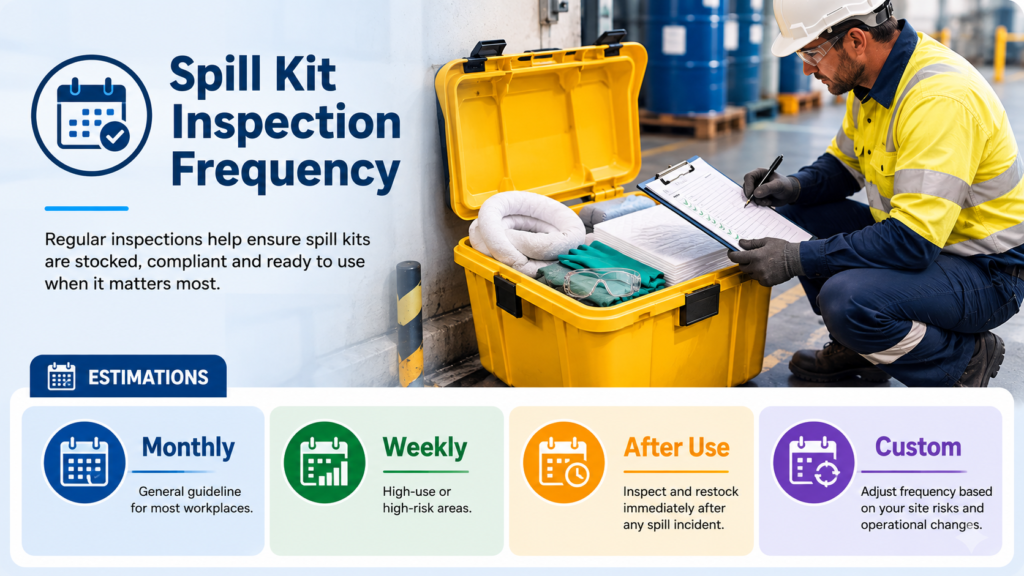
Inspection schedules should reflect site risks, kit usage and restocking needs after a spill.
Checks should consider whether:
- absorbent materials and other required contents are still available
- used or damaged supplies have been replaced
- required PPE remains available and suitable
- the equipment can still be reached easily
- workplace changes have introduced new liquids, equipment or spill pathways.
A busy maintenance facility may need more frequent checks than a location where spill-response equipment is rarely used.
Interfil’s existing guide to oil and water spill kit preparedness and proper usage also discusses keeping spill-response equipment accessible and ensuring workers know how to use it.
Common spill kit compliance mistakes
Common issues include using absorbents that are not suitable for the liquid involved, allowing access to spill stations to become blocked, and failing to replace used supplies.
Worker training is also important. Staff should know where equipment is located, how to follow the site procedure and when a spill needs to be escalated.
Planning should also consider where a spill could travel. Oil contained beside a machine presents a different risk from the same liquid reaching a drain, soil or an adjoining work area.
Best practices for workplace spill response
For a spill that can be safely managed on site, the response can generally follow:
Assess → Contain → Absorb or recover → Dispose → Restock
Identify the substance and immediate hazards, then prevent the spill from spreading using suitable absorbents, booms or barriers where required. Recover or absorb the liquid using a method appropriate to the substance, then manage contaminated materials according to applicable waste requirements.
Once the area is safe, complete any required reporting and replace used supplies. Workers should escalate spills that exceed their training, equipment or workplace procedures.
How Interfil supports industrial spill preparedness
Interfil supplies oil and water spill absorbents for industrial applications involving liquids including oils, water and coolants. Its Rapid Absorb material can also be used as maintenance matting beneath machinery where oil or coolant leakage is an ongoing concern.
Containing spills before they reach drains, soil or surrounding work areas is also an important part of industrial environmental protection.
Frequently asked questions
Do Australian workplaces legally need spill kits?
There is no single rule requiring every Australian workplace to have an identical spill kit. Where hazardous chemical spills or leaks present a risk, the model WHS framework includes requirements for appropriate spill-containment arrangements. Businesses must consider the requirements that apply to their substances, activities and jurisdiction.
What type of spill kit does a workplace need?
The equipment should suit the liquids and foreseeable spill scenarios on site. Oils and fuels, compatible water-based liquids and hazardous chemicals can require different absorbents, containment methods, PPE and response procedures.
Where should spill kits be stored?
Spill-response equipment should be readily accessible near relevant spill risks without being positioned where the spill itself could prevent workers from reaching it.
How often should spill kits be inspected?
Inspection frequency should reflect workplace risks, usage and site procedures. Checks should ensure equipment remains accessible, appropriately stocked and suitable for the liquids present.
Is having a spill kit enough for compliance?
No. Depending on the workplace and the substances involved, spill preparedness can also involve containment systems, SDS information, emergency procedures, PPE, worker training and appropriate management of contaminated waste.
Building spill preparedness into everyday operations
Industrial spill kit compliance works best as part of routine workplace risk management rather than as a once-off equipment purchase.
Businesses should identify credible spill risks, select appropriate response equipment and ensure it remains accessible and stocked. Procedures and worker training should reflect the liquids actually handled on site and identify when a release needs to be escalated.
For workplaces managing oil, water or coolant spills, Interfil can provide absorbent materials suited to industrial applications. Contact Interfil to discuss the liquids and operating conditions involved and determine which absorbent products may be appropriate.