

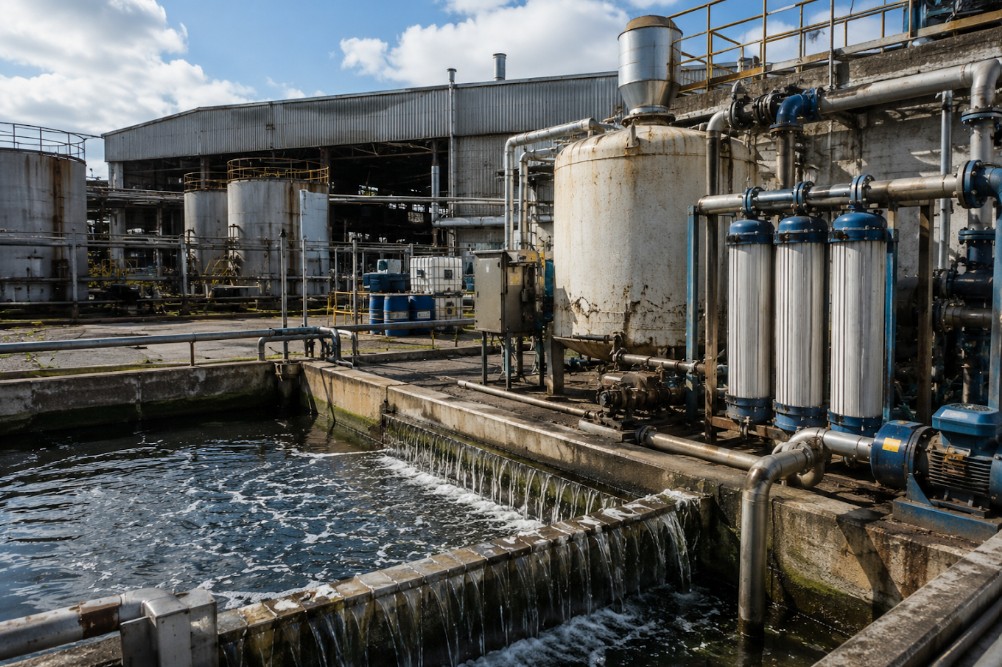
Manufacturing facilities rely on water for a wide range of processes, including machining, cleaning, cooling, washing, and material handling. As water moves through these operations, it collects contaminants such as metal fines, oils, sludge, and suspended solids. If these contaminants are not removed, wastewater becomes more difficult to manage, more expensive to dispose of, and unsuitable for reuse.
This is why wastewater filtration products have become an essential part of sustainable manufacturing practices. Effective filtration systems help manufacturers recycle water, reduce waste, protect equipment, and improve environmental performance while supporting efficient production processes.
What Are Wastewater Filtration Products?
Wastewater filtration products are designed to remove contaminants from industrial wastewater before it is discharged, recycled, or reused.
According to Interfil, its wastewater filtration systems focus on recycling water and drying solids for disposal, helping manufacturers manage liquid waste more effectively.
Depending on the application, filtration systems can remove contaminants such as metal particles, sludge, sediment, oils, grease, process residues, and suspended solids. The exact combination varies according to the manufacturing process and the characteristics of the wastewater stream.
The filtered contaminants can then be collected and managed separately, while cleaner water moves through the next stage of treatment or reuse.
Common wastewater filtration products include sludge dewatering systems, centrifuges, filter media, oil-water separation equipment, and vacuum-assisted filtration systems. The combination used depends on the contaminants present and the level of water quality required for discharge or reuse.
Why Manufacturing Wastewater Requires Filtration
Different manufacturing processes create different wastewater challenges.
A machining facility may generate wastewater containing coolant residue and metal fines. A food processing plant may produce wastewater with organic solids. Mining and industrial processing operations often deal with high levels of suspended material that can affect water quality and equipment performance.
Without proper filtration, contaminants continue circulating through systems or enter waste streams that are more difficult and expensive to manage.
Interfil’s filtration systems are used in industries where liquid filtration is critical for separating solids from liquids and improving wastewater handling.
A properly designed filtration system removes contaminants before they become larger operational problems, helping manufacturers maintain cleaner processes and better control over waste streams.
Supporting Water Recycling and Reuse
One of the most practical sustainability benefits of filtration is water reuse.
Replacing contaminated process water with fresh water every time it becomes dirty increases both operating costs and water consumption. Filtration helps remove contaminants, allowing water to remain usable for longer periods.
Interfil specifically identifies water recycling as a key objective of its wastewater filtration systems.
For example, manufacturing facilities may filter wastewater before reusing it in equipment washdown systems, cooling processes, or other non-critical applications. This reduces demand on freshwater supplies while lowering disposal volumes.
As water costs continue to rise, recycling filtered water can provide both environmental and operational benefits.
Many organisations are also investing in technologies aimed at reducing water consumption, including advanced wastewater recycling technologies.
Reducing Waste and Improving Disposal Processes
Wastewater treatment is not only about cleaning water. It is also about controlling the waste generated during manufacturing.
Filtration systems capture contaminants before they spread throughout the wastewater stream. This allows solids to be concentrated, separated, and disposed of more efficiently.
Interfil notes that its wastewater systems focus on drying separated solids for disposal after filtration.
In practical terms, this means manufacturers can reduce the volume of liquid waste requiring treatment while improving the handling of solid waste materials.
Facilities that generate metal fines, sludge, or process residues often benefit from having these materials separated before wastewater disposal becomes more complex.
In many applications, this process works alongside sludge dewatering systems that support circular water management in industry by reducing waste volumes and improving water recovery.
Protecting Equipment From Contamination
A common question manufacturers ask is how wastewater filtration affects day-to-day operations.
Wastewater filtration products help protect equipment by removing contaminants that can cause blockages, wear, and reduced system efficiency.
Particles suspended in contaminated water can accumulate inside pumps, valves, pipework, and heat exchangers. Over time, this build-up affects performance and increases maintenance requirements.
Poor wastewater management can contribute to many of the same issues associated with industrial equipment lifespan being affected by inadequate wastewater filtration, including premature wear and unplanned maintenance.
Removing contaminants before water is reused helps reduce these problems and supports more reliable operation of production systems.
This principle also applies to coolant management. Removing contaminants from coolant helps improve fluid quality and supports more reliable manufacturing operations.
Supporting Sustainable Manufacturing Goals
Sustainability in manufacturing often focuses on reducing waste, improving efficiency, and using resources more effectively.
Wastewater filtration contributes directly to sustainability goals by reducing freshwater consumption through recycling, lowering waste disposal volumes, improving resource recovery, supporting cleaner production processes, and helping facilities manage contaminants more effectively.
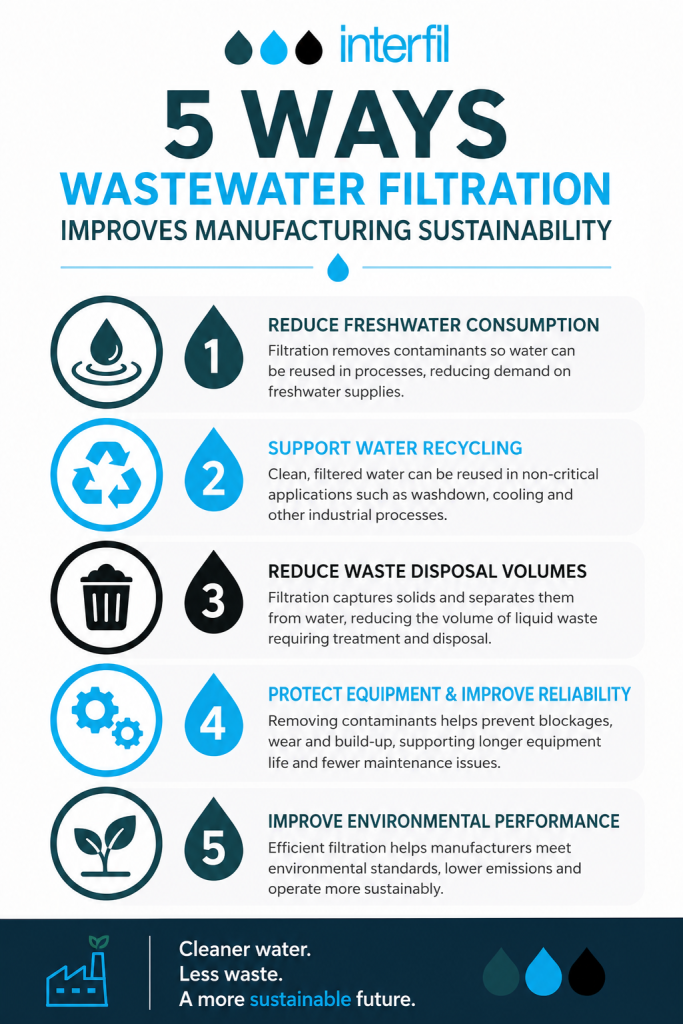
Discover how wastewater filtration helps manufacturers conserve water, reduce waste and improve operational sustainability.
Many businesses are also adopting broader sustainable practices in the mining industry and other industrial sectors to reduce environmental impact while maintaining operational performance.
Rather than treating wastewater as a by-product that must simply be removed, filtration allows manufacturers to recover value from water and other materials that would otherwise be discarded.
Many manufacturers combine wastewater treatment with oil filtration to improve fluid cleanliness and reduce contamination throughout their operations.
This approach supports both environmental objectives and long-term operational efficiency.
Choosing the Right Wastewater Filtration Solution
Wastewater characteristics vary significantly between industries and manufacturing processes. A filtration system that performs well in a metalworking facility may not be suitable for food production or mining applications.
Understanding common pollutants in wastewater and their impact on treatment systems can help manufacturers select the most appropriate filtration technology.
When evaluating filtration equipment, manufacturers should consider factors such as flow rate requirements, the types of contaminants present, water reuse goals, maintenance requirements, and how the system will integrate with existing treatment processes.
Many facilities integrate wastewater treatment into broader filtration systems that support fluid management across multiple production processes.
Selecting the right solution helps ensure contaminants are removed efficiently while supporting broader operational and sustainability goals.
Better Water Management Supports Long-Term Sustainability
Manufacturers are increasingly looking for practical ways to reduce waste and improve environmental performance without disrupting production.
Wastewater filtration products provide a direct solution by helping facilities remove contaminants, recycle water, manage waste more effectively, and protect equipment from unnecessary wear. These improvements contribute to more sustainable manufacturing practices and support operational efficiency.
As industries continue to focus on responsible resource management, wastewater filtration will remain a key part of building cleaner, more efficient manufacturing processes.